
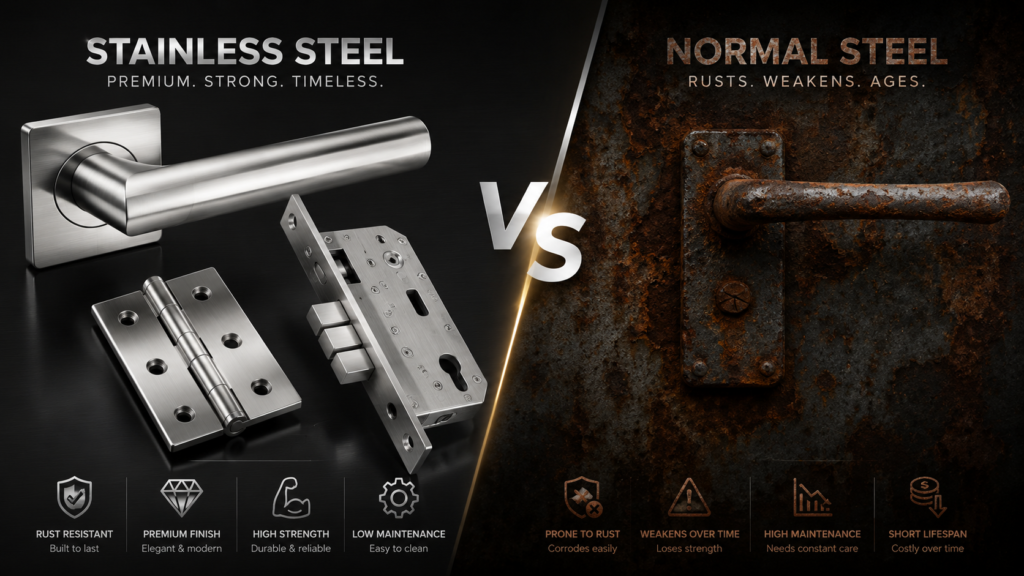
Stainless Steel vs Normal Steel: Understanding the Difference
Steel is one of the most widely used materials in construction, manufacturing, hardware, furniture, and industrial applications. Whether you are choosing door handles, locks, kitchen fittings, railings, or construction materials, understanding the difference between stainless steel (SS) and normal steel is essential. While both materials are strong and versatile, they differ significantly in composition, durability, appearance, maintenance, and cost.
What is Stainless Steel?
Stainless steel, often referred to as SS, is a steel alloy that contains a minimum of 10.5% chromium. This chromium forms a thin protective layer on the surface known as a passive layer, which prevents rust and corrosion.
Depending on the application, stainless steel may also contain elements such as nickel, molybdenum, and titanium to enhance its strength, corrosion resistance, and appearance.
Common grades of stainless steel include:
- SS 304 – Widely used in kitchens, hardware fittings, and appliances.
- SS 316 – Offers superior corrosion resistance and is ideal for coastal areas.
- SS 202 – A more economical option for decorative and light-duty applications.
What is Normal Steel?
Normal steel, also known as carbon steel or mild steel, is primarily composed of iron and carbon. Unlike stainless steel, it does not contain enough chromium to resist corrosion naturally.
Normal steel is known for its strength, affordability, and versatility. However, it requires protective coatings such as paint, galvanization, or powder coating to prevent rusting.
It is commonly used in:
- Building structures
- Industrial machinery
- Gates and grills
- Construction frameworks
- Automotive components
Composition Difference
The primary difference lies in their chemical composition.
Stainless Steel
- Contains chromium (minimum 10.5%)
- May contain nickel and molybdenum
- Highly resistant to corrosion
Normal Steel
- Mainly iron and carbon
- Little or no chromium
- Prone to rust when exposed to moisture
The chromium content is what makes stainless steel “stainless.”
Corrosion Resistance
One of the biggest advantages of stainless steel is its ability to resist corrosion.
Stainless Steel
When exposed to air, the chromium reacts with oxygen to form a protective layer that prevents rust from developing. Even if scratched, this layer can reform itself naturally.
Normal Steel
Normal steel lacks this protective layer. When exposed to water, humidity, or chemicals, it can rust quickly unless protected by coatings.
Winner: Stainless Steel
For areas with high moisture levels, such as kitchens, bathrooms, and coastal regions, stainless steel is the preferred choice.
Strength and Durability
Both materials are strong, but they perform differently depending on the application.
Stainless Steel
- High tensile strength
- Excellent durability
- Resistant to impact and wear
- Long service life
Normal Steel
- Extremely strong for structural applications
- Handles heavy loads effectively
- Can weaken over time if corrosion occurs
For long-term durability, stainless steel generally performs better because it resists environmental damage.
Appearance
Appearance plays an important role in modern architecture and interior design.
Stainless Steel
- Smooth and attractive finish
- Modern and premium appearance
- Available in brushed, satin, mirror, and matte finishes
- Retains its shine for years
Normal Steel
- Industrial appearance
- Usually painted or coated
- May lose its finish over time due to rust and weather exposure
Winner: Stainless Steel
Its elegant look makes it ideal for luxury homes, commercial spaces, and premium hardware applications.
Maintenance Requirements
Maintenance costs can significantly affect the overall value of a material.
Stainless Steel
- Requires minimal maintenance
- Easy to clean
- Does not require painting
- Resistant to staining
Normal Steel
- Requires regular maintenance
- Needs repainting or protective coatings
- Rust must be treated to prevent further damage
Winner: Stainless Steel
Although it costs more initially, the lower maintenance requirements often make it more economical in the long run.
Cost Comparison
Cost is often a deciding factor when selecting materials.
Stainless Steel
- Higher initial investment
- Premium material pricing
- Lower long-term maintenance costs
Normal Steel
- Lower purchase cost
- More affordable for large projects
- Higher maintenance expenses over time
Winner: Depends on the Application
For budget-conscious projects, normal steel may be suitable. For long-term value and durability, stainless steel is often the better investment.
Applications in Hardware Industry
Stainless Steel Applications
- Door handles
- Mortise locks
- Hinges
- Kitchen accessories
- Bathroom fittings
- Glass fittings
- Railings
- Architectural hardware
Normal Steel Applications
- Gates
- Structural frames
- Industrial equipment
- Construction support systems
- Machinery components
In premium hardware and architectural projects, stainless steel is generally preferred because of its appearance and corrosion resistance.
Environmental Impact
Both materials are recyclable, making them environmentally friendly options.
Stainless Steel
- 100% recyclable
- Long lifespan reduces replacement needs
- Sustainable for long-term use
Normal Steel
- Also highly recyclable
- Widely reused in construction and manufacturing
Both materials contribute positively to sustainability when properly recycled.
Which Material is Better for Coastal Areas?
In coastal cities such as Kochi, humidity and salt in the air can accelerate corrosion.
Stainless Steel
- Highly resistant to moisture
- Better suited for coastal environments
- SS 316 is particularly recommended
Normal Steel
- More susceptible to rust
- Requires frequent maintenance and protective coatings
For coastal applications, stainless steel is the clear winner.